Chat with us
Attribution & Analytics

Marketing that survives CFO scrutiny.

For high-ticket brands, the difference between defensible marketing and dead budget is one thing — attribution. We build the analytics stack that connects every ad click, form fill, CRM record, and closed deal into a single source of truth. Real attribution. Multi-touch. CFO-defensible from month one.

Signal lost · iOS14
~30%
of conversions silently missing from your ad platforms. Server-side tracking recovers most of them within 30 days.
Budget recovery
20–30%
of marketing budget typically flagged as waste once attribution is honest. That's the recovery hiding in your account right now.
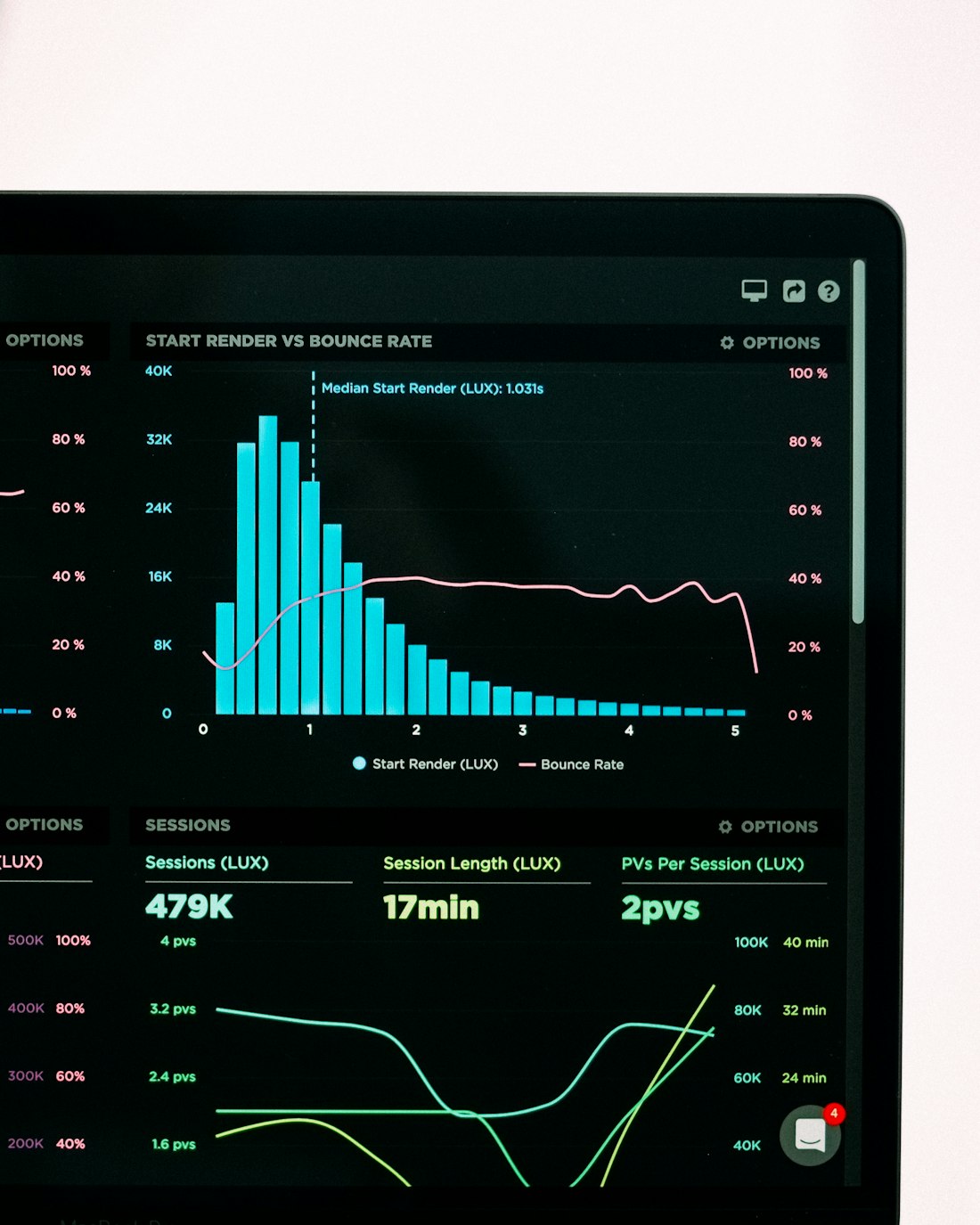
Analytics dashboard showing users, sessions and conversion data
Ch. 01 — The Problem

Your marketing dashboards are lying.

GA4 shows one number. Meta shows a different one. Google Ads shows a third. LinkedIn shows a fourth. None of them talk to each other. All of them are wrong in some direction.

iOS14 broke client-side tracking two years ago — 30–40% of your conversions are silently missing from ad platforms. Long sales cycles push conversions past attribution windows. Nobody wired the CRM back to the ad platforms, so revenue can't be traced to campaigns. Your marketing team is defending numbers they can't actually reconcile.

The result: your CFO stops trusting the marketing budget entirely — and every request for more spend becomes a fight. Without honest attribution, you're flying blind and defending yourself with charts.

Ch. 02 — See the Data Loss

What your dashboards show vs. what's actually happening.

Every ad platform is optimising against a different truth. Once you wire server-side tracking, offline conversions, and CRM matching, the numbers finally start agreeing with each other — and with your bank account.

What your dashboards show
"Which number do we defend?"
GA4 conversions 320
Meta conversions 180
Google Ads conversions 240

Three platforms. Three completely different truths. Every one of them wrong.

What's actually happening
"Now the picture makes sense."
True conversions · server-side + CRM matched 480
Recovered via server-side + CAPI ~35%
Average sales cycle 84 days

One source of truth. Auditable, reconciled, defensible. All channels finally speaking the same language.

Ch. 03 — The CFO Layer

What CFOs actually want from marketing analytics.

The five questions that matter

The five questions every CFO asks marketing — and the ones most agencies can't actually answer:

  1. What's our real cost per closed customer — not per lead?
  2. Which channels contributed to closed revenue last quarter?
  3. What's the payback period on marketing spend by channel?
  4. What percentage of pipeline came from paid vs. organic vs. nurture?
  5. If we cut this channel by 30%, what actually happens to revenue?

Every one of these questions requires proper attribution. Every one is impossible to answer without connecting ad platforms, GA4, CRM, and revenue data into a single truth. That's the entire deliverable of this service — turning marketing from a cost centre your CFO doesn't trust into a growth engine they can defend to the board.

Ch. 04 — Attribution Models

How you count marketing credit determines what wins.

Same buyer journey. Four different attribution models. Four completely different conclusions about which channel drove revenue. Here's how each works — and which one we use for high-ticket brands.

Example buyer journey: Meta ad → Google search → Email click → Direct visit → Closed deal

Model 01

Last-Click Attribution

All credit given to the final touchpoint before conversion. GA4 default. Meta default (partially). Almost universally wrong for high-ticket.

Meta ad
0%
Google
0%
Email
0%
Direct
100%

Under-credits paid channels. Blames organic for everything.

Model 02

First-Click Attribution

All credit given to the first touchpoint that started the buyer journey. Popular in "brand awareness" reporting.

Meta ad
100%
Google
0%
Email
0%
Direct
0%

Over-credits awareness. Ignores what actually closed the deal.

Model 03

Linear Attribution

Credit distributed equally across every touchpoint in the journey. Fair, simple, and directionally reasonable — but blunt.

Meta ad
25%
Google
25%
Email
25%
Direct
25%

Fair but flat. Ignores which touchpoints actually drove intent.

What we use
Model 04

Data-Driven MTA

Weighted credit based on your actual buyer behaviour — touchpoints closer to conversion earn more credit, but every meaningful step counts.

Meta ad
15%
Google
30%
Email
25%
Direct
30%

Reflects the real buying process. Every touchpoint counted.

For a high-ticket brand with a 60–180 day sales cycle, last-click attribution will tell you paid media isn't working and your organic team should get a raise. That report will be beautifully formatted and completely wrong. Data-driven multi-touch attribution — properly implemented — is the only model that survives contact with a real high-ticket buyer journey.

Ch. 05 — The Data Pipeline

From event to insight in real time.

This is the infrastructure that makes real attribution possible. Each step recovers signal that most brands lose — and each step is where 30–40% of marketing waste hides.

01

Event Fires

Ad click, form fill, page view, video watch. Every meaningful interaction captured with source, campaign, and creative attribution intact.

02

Server Captures

GTM Server-Side recovers 30–40% of conversions that iOS14 and browser privacy features block from client-side pixels.

03

CRM Enriches

Every event tagged with lead data, source, campaign, creative. First-party data joined with sales pipeline stages.

04

Warehouse Stores

All data flows into a unified warehouse — BigQuery, Snowflake, or Firebolt. Historical joins possible. Full auditability.

05

Dashboard Reveals

Looker Studio or Superset. Real-time. Single source of truth. Attribution visualised. CFO-defensible from the first login.

Once wired, every channel is measured the same way. Every conversion has a clear attribution chain. Marketing budget decisions get made from data instead of guesswork. This is where analytics stops being a reporting exercise and becomes a growth advantage.

Ch. 06 — The 5-Pillar Attribution System

Five pillars. One source of truth.

Every attribution engagement runs on the same five pillars — refined across categories from real estate to B2B SaaS. All designed to work together.

01

Server-Side Tracking

Google Tag Manager Server-Side deployed on your first-party domain. Recovers the 30–40% of conversions lost to iOS14 and browser privacy. The single highest-ROI attribution fix.

02

Offline Conversion APIs

Meta CAPI, Google offline conversions, LinkedIn CAPI wired to your CRM. Every closed deal signal fires back to the ad platforms. Algorithms optimise for buyers, not form-fillers.

03

Multi-Touch Attribution

Data-driven attribution model built for your specific buyer journey. Not GA4 defaults. Not last-click theatre. The real weighted math of what actually drove revenue.

04

Unified Data Warehouse

BigQuery, Snowflake, or Firebolt — one place where every event, every lead, every conversion, every closed deal lives together. Full historical audit trail.

05

Live Executive Dashboards

Looker Studio or Superset. Real-time. CFO-approved metrics. Auditable to the underlying event. The dashboard that ends the "which number do we trust?" argument forever.

Ch. 07 — Timeline

8 weeks to full stack. CFO-defensible from week 4.

Attribution isn't built in a sprint. It's built in phases — because doing it wrong is worse than not doing it at all.

Weeks 1–2

Audit + Architecture

Current tracking audit. Data source inventory. Warehouse decision (BigQuery vs Snowflake vs Firebolt). Architecture designed and documented.

Weeks 3–5

Foundation Build

Server-side tracking deployed. Offline conversion APIs live for Meta, Google, LinkedIn. CRM data pipeline running. First recovered conversions flow.

Weeks 6–8

Attribution + Dashboards

Multi-touch attribution model built and applied. Dashboards live for marketing, sales, and executives. Sales team trained on new signal flow.

Ongoing

Optimise

Weekly data quality checks. Monthly executive reporting. Quarterly attribution model refinement as your buyer journey evolves. Compounding accuracy.

Ch. 08 — Who This Is For + What's Included

Built for brands where marketing math has to be defended.

✓ You're a fit if

  • Spending ₹5L+/month across multiple marketing channels
  • Have (or willing to build) a CRM
  • Sales cycle 30+ days
  • CFO or finance actively questions marketing ROI
  • Multi-channel: paid + organic + nurture

✗ Not a fit if

  • Under ₹2L/month spend (attribution cost exceeds waste recovery)
  • Single-channel brands (last-click is often good enough)
  • No CRM and no intention to build one

What's included

  • Full server-side tracking deployment (Google Tag Manager Server-Side)
  • Meta CAPI, Google offline conversions, LinkedIn CAPI integration
  • Multi-touch attribution model built and applied to your buyer journey
  • Data warehouse setup (BigQuery, Snowflake, or Firebolt)
  • Live executive dashboard (Looker Studio or Superset)
  • Weekly data quality monitoring
  • Monthly executive reporting with attribution deep-dive
  • Quarterly attribution model refinement
SETUP FROM ₹2.5L (ONE-TIME) · MONTHLY MONITORING FROM ₹1L · TOOLS AT COST
Ch. 09 — FAQ

Questions marketing leaders and CFOs ask us first.

Why is attribution suddenly a big deal in 2026?
Three reasons: (1) iOS14 and browser privacy have decimated client-side tracking — 30–40% of conversions are silently missing from most brands' dashboards, (2) high-ticket buyer journeys are longer and more multi-channel than ever, breaking last-click math, (3) CFOs and boards are demanding marketing accountability at levels the industry has never seen. Attribution isn't optional anymore. It's table stakes.
What's server-side tracking, and do I really need it?
Server-side tracking (Google Tag Manager Server-Side) captures conversion events on your first-party server instead of relying on client-side browser cookies. This bypasses iOS14 restrictions, ad blockers, and browser privacy features that block traditional pixels. For brands spending ₹5L+/month, it typically recovers 15–35% of "missing" conversions — the single highest-ROI attribution fix. Yes, you really need it.
What attribution model do you use?
Data-driven multi-touch attribution as the default for high-ticket brands. For very short sales cycles (under 14 days), we sometimes use position-based (a hybrid of first-click and last-click). Never last-click alone — it systematically under-credits paid channels and misleads budget decisions. The Ch. 04 comparison on this page shows the difference in real numbers.
Which tools do you support?
Warehousing: BigQuery, Snowflake, Firebolt. Server-side: Google Tag Manager Server-Side, Stape.io. Dashboards: Looker Studio, Apache Superset, Metabase. CRMs: HubSpot, Salesforce, Zoho, LeadSquared, Freshsales, Pipedrive, Kylas. Ad platforms: Meta, Google Ads, LinkedIn, TikTok. We're tool-agnostic — we recommend what fits your team's skills and existing stack, not what pays us more.
Do I really need a data warehouse?
For proper multi-touch attribution across 4+ channels with a CRM — yes. Warehouses let you join data from ad platforms + CRM + GA4 + web events in ways that dashboards alone can't. For smaller stacks with just Meta + Google + GA4, we can sometimes skip the warehouse and use direct integrations. The Week 1 audit tells us which fits your specific case.
How long does full setup take?
6–8 weeks for the complete stack — server-side tracking + offline conversion APIs + warehouse + attribution model + dashboards. Faster if your existing infrastructure is cleaner. Slower if we have to untangle years of previous tracking attempts. Most clients see the first meaningful signal recovery by week 4.
Do we own everything after the engagement?
Always. You own every configuration, every dashboard, every attribution model, every warehouse table. If you ever move on, you take the full stack with you. All documentation lives in your team's Notion or Confluence — never locked in our systems.
What if we already have GA4?
GA4 is one input, not the answer. It's blind to iOS14 signal loss, uses generic attribution models, doesn't see your CRM data, and can't do proper multi-touch modelling out of the box. We keep GA4 running (it's still useful for behavioural analytics) but build the real attribution stack on top of it.
How does this pair with your other services?
Attribution & Analytics is the closing layer for everything else. Paid Media, SEO, Performance Creative, and Nurture all generate signal that only becomes useful once attribution is honest. Roughly half our clients start with Paid Media or SEO, then add attribution within 90 days once they realise their reporting has been lying to them. The other services get more effective the moment attribution is fixed.
What if my CFO doesn't care about marketing metrics?
Then either you don't need this service — or your CFO's role in the company is about to change. Every serious high-ticket brand we work with has a CFO who cares deeply about payback period, cost per closed customer, and channel attribution. If yours doesn't yet, they will as soon as marketing budget hits a threshold that requires board justification. We build for the CFO you'll have in 18 months, not just the one you have today.
Ch. 10 — Get Started

See where your marketing math is broken.

Book a free Attribution Audit. We'll run your ad accounts, GA4, and CRM through our audit framework and send you a full analysis of where you're losing signal — and where 20–30% of your budget is quietly disappearing. Delivered even if you never hire us.

Book my Attribution Audit ↗
5-day audit · Written analysis + recommendations · No sales pitch
Chat with us