


1. Start With a Clear Niche
“We do all types of interiors” sounds safe, but it makes your marketing vague.
Clients remember designers who are known for something specific:
- Apartments for families moving into new homes
- Luxury villas
- Modular kitchens and wardrobes
- Offices and co-working spaces
- Restaurants, cafés and retail
- Renovations of older homes
You can still take other projects. But your website, content and ads should speak clearly to the clients you most want.
2. Understand When Clients Start Looking
Timing matters in lead generation for interior designers. Most homeowners start searching at predictable moments:
- A few months before possession of a new apartment
- After buying a resale property
- When a family grows or children move out
- Before a wedding or major family event
- When a business opens or relocates an office
Plan your campaigns around these moments. For example, target residents of large projects nearing handover, or run ads around new-home searches in specific areas.
3. Build a Portfolio Website That Sells
Instagram shows your style. Your website should close the decision.
Clients want more than beautiful photos. They want to know whether you can deliver their kind of project, in their budget, on time. Each project page should include:
- Project type, size and location (area, not exact address)
- The client’s brief and the challenge
- Your approach and key design decisions
- Timeline from design to handover
- A budget band, if the client is comfortable sharing it
- Before-and-after photos of your own work, with client consent
- An enquiry button on every project page, not just the contact page
Most visitors will view your site on a phone, so make sure galleries load quickly and the WhatsApp button is always within reach.
4. Use Instagram and Pinterest to Show Your Style
Interior design is one of the most visual businesses there is, which makes Instagram a natural fit. Content that tends to work well:
- Walkthrough reels of completed projects
- Before-and-after transformations
- Process content: mood boards, material selection, site progress
- Practical tips: storage ideas, colour choices, lighting mistakes
- Client stories, in their own words, with consent
Pinterest also works well for interiors, because people use it to collect ideas before they hire anyone.
5. Show Up on Google
When someone searches “interior designers in HSR Layout” or “modular kitchen designers in Anna Nagar”, they’re ready to talk to someone.
Google Business Profile
Complete every section of your Google Business Profile, add fresh project photos regularly and ask every happy client for a review.
SEO
Create pages for your main services and the areas you serve. Write helpful guides on costs, timelines and materials, and answer the questions clients ask in consultations.
Google Search Ads
Target specific searches by service and area, and send people to a relevant landing page, not your homepage.
6. Partner With Builders, Architects and Agents
Online channels work best alongside offline relationships.
- Builders and developers: some partner with designers for handover packages.
- Architects: they often need trusted designers for interiors.
- Real estate agents: they meet buyers at exactly the right moment.
- Furniture and material showrooms: their customers often need design help.
Treat partners like clients. Share your portfolio, keep them updated and thank them for referrals.
7. Use Meta Lead Ads Carefully
Facebook and Instagram lead ads can bring volume quickly, but quality varies. Improve it by:
- Using real project videos rather than stock images
- Adding qualifying questions about property type, possession date and budget
- Targeting areas and projects that match your niche
- Calling or messaging within minutes of a form submission
8. Qualify Leads Before the First Meeting
Qualification is the step most often skipped in lead generation for interior designers. A first meeting or site visit takes hours, and qualification makes sure you spend that time with the right people.
| Question | Strong fit | Weak fit |
|---|---|---|
| What type of property is it, and where? | Matches your niche and area | Outside your area or niche |
| What’s the size or configuration? | Full home or office | A single small item |
| When is possession, or when do you want to start? | Within 1–3 months | No timeline |
| Which rooms or areas need work? | Clear scope | “Just exploring” |
| What’s your approximate budget? | Within your usual range | Far below your range |
Sharing a starting budget or package range on your website also helps. It filters out mismatched enquiries before they reach you.
9. Turn Consultations Into Projects
- Respond fast: clients often contact several designers at once.
- Use a clear proposal format with scope, timeline and costs.
- Consider a paid design stage to filter serious clients and value your time.
- Follow up with relevant examples of similar projects.
- Track lost leads and the reasons, so you can adjust pricing or positioning.
10. Measure What Brings Real Projects
- Enquiries by source: Instagram, Google, referrals, partners
- Cost per qualified enquiry
- Consultations and site visits booked
- Proposals sent and accepted
- Average project value by source
You may find that one channel brings fewer enquiries but much bigger projects. That’s the channel to grow.
A Simple 90-Day Plan
| Phase | Focus | Outputs |
|---|---|---|
| Days 1–30 | Positioning and portfolio | Niche, 5–8 project case studies, Google Business Profile, WhatsApp tracking |
| Days 31–60 | Visibility | Weekly reels, Pinterest boards, Google Search campaign, qualifying forms |
| Days 61–90 | Partnerships and optimisation | Builder and architect outreach, review requests, monthly lead reports |
Common Mistakes to Avoid
- Posting only finished photos, with no story or process
- Sending ad traffic to a homepage with no enquiry button
- Hiding all pricing, so every enquiry becomes a price check
- Replying to enquiries the next day
- Relying on one channel, such as Instagram or a single builder
Final Thoughts
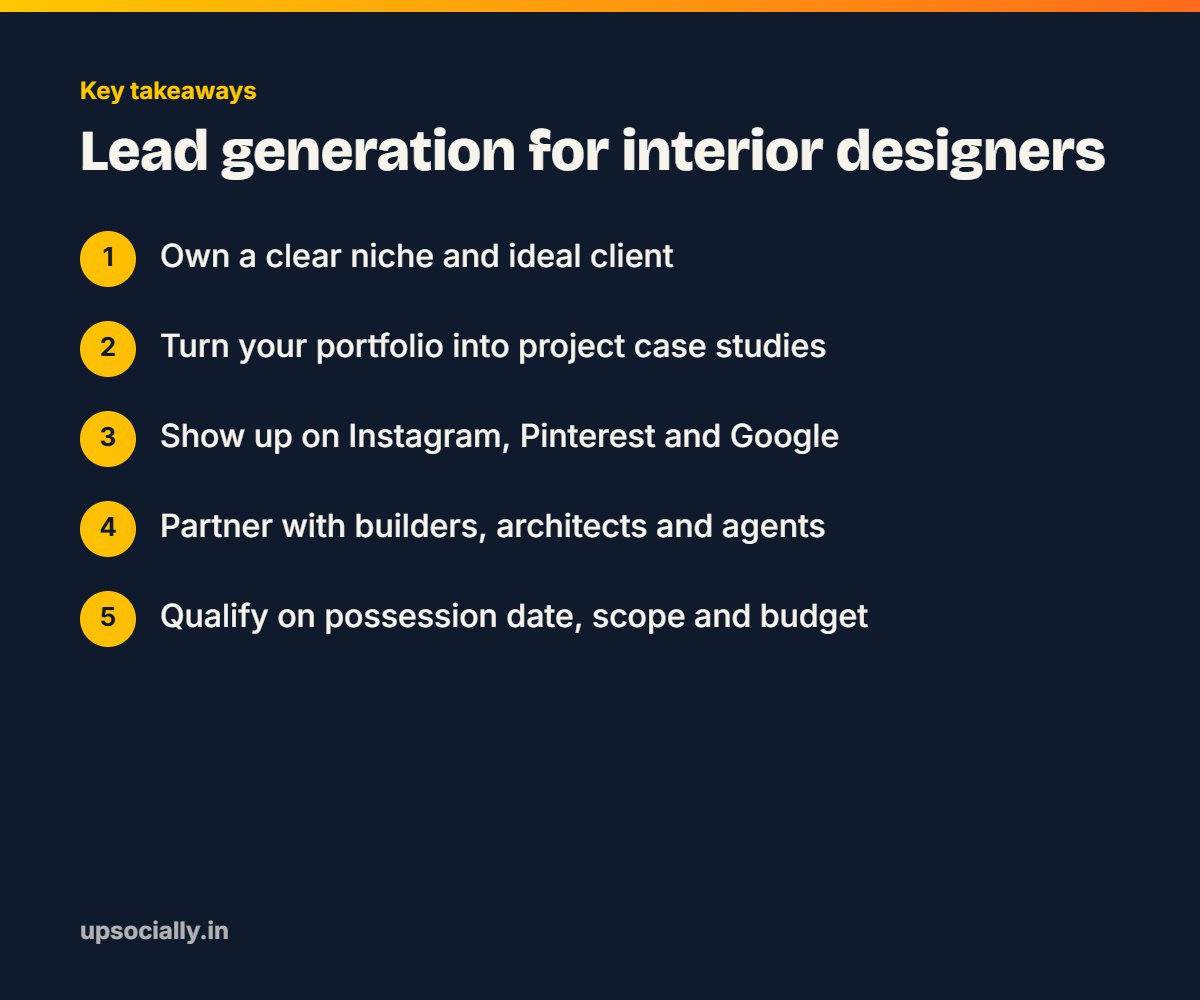
Lead generation for interior designers works best when your niche, portfolio and process all point to the same kind of client.
Show your work clearly, be open about budgets, respond quickly and measure which channels bring real projects, not just enquiries.
See how we approach digital marketing for interior designers, read more in our interior designer marketing FAQs, or learn what goes into a good studio website in our website development checklist.
Frequently Asked Questions
How do interior designers get clients in India?
Most combine referrals with Instagram, Google Business Profile, search ads, a strong portfolio website and partnerships with builders, architects and real estate agents.
Is Instagram enough for lead generation for interior designers?
Instagram is excellent for showing your style, but it works best alongside a portfolio website and Google presence. Many clients who discover you on Instagram check your website and reviews before they contact you.
Should interior designers show prices on their website?
Sharing starting prices, package ranges or budget bands helps filter enquiries and builds trust. You don’t need to publish detailed quotes.
How can I reduce price-only enquiries?
Show budget ranges, explain your process and the value of design, ask qualifying questions early and consider a paid design consultation.
Which leads convert best for interior designers?
Leads from referrals, partners and high-intent Google searches often convert best. Track enquiries by source to find what works for your studio.
Are lead marketplaces worth it for interior designers?
Some designers use lead marketplaces, but leads are often shared with several studios and price-focused. Owned channels like your website, Google profile and Instagram usually bring better-fit clients over time.