


Parents check a school’s Instagram before they visit. They’re looking for proof: real classrooms, real teachers, real events and a sense of what their child’s day would feel like. A polished brochure can’t do that. A well-run social media page can.
This guide covers social media marketing for schools in India step by step: which platforms to use, what to post, how to run ads that reach parents, and the consent and advertising rules every school should follow.
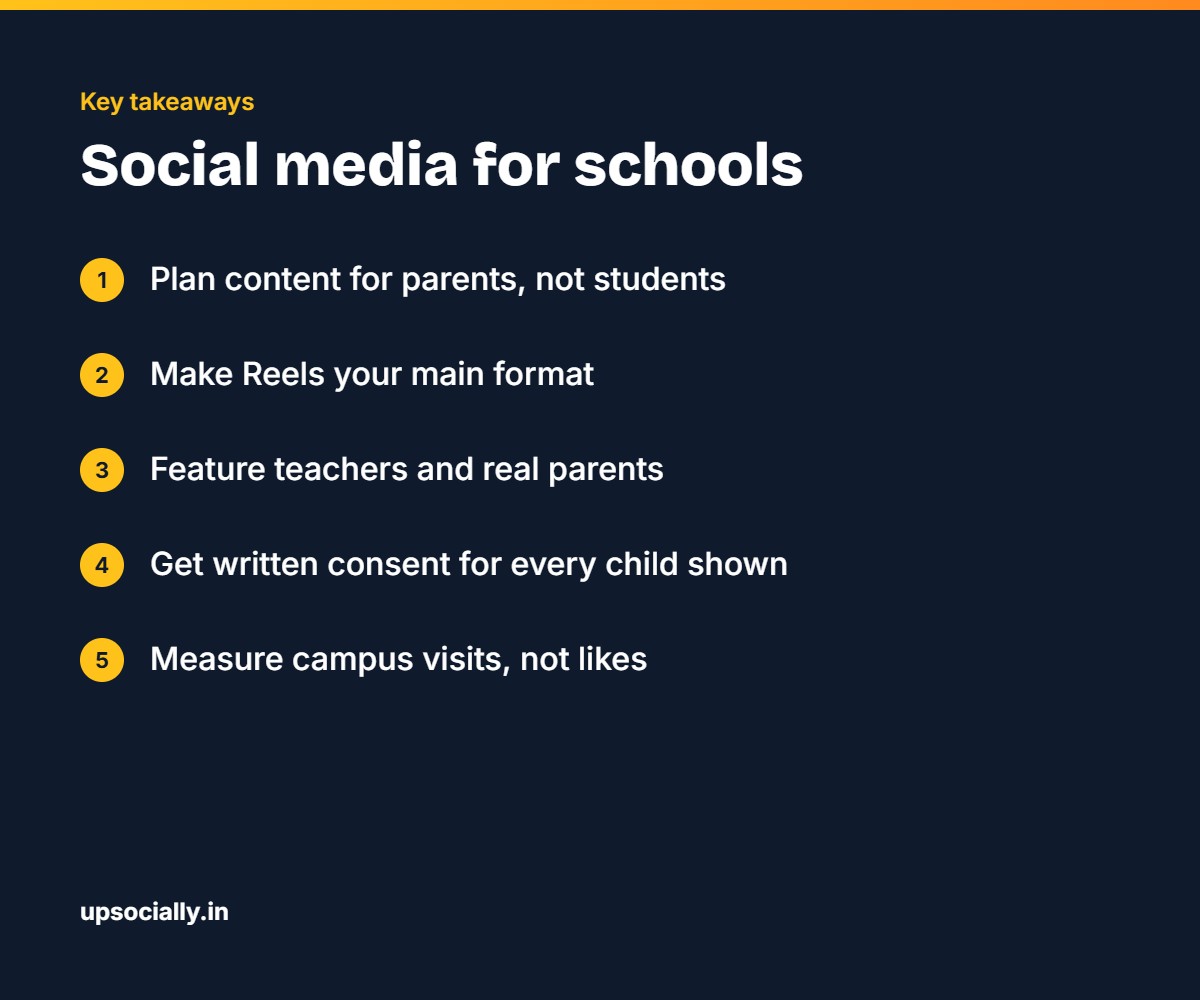
Key takeaways
- Your audience is parents, not students. Plan content around what parents need to see before they visit.
- Instagram and Facebook do most of the work, with YouTube for longer videos and WhatsApp for follow-up.
- Real, unpolished moments build more trust than designed posters.
- Get written parental consent for every child who appears, and keep claims accurate.
Why social media marketing for schools matters now
Most parents shortlist schools online before they visit. Your Google profile and website tell them the facts. Your social pages show the culture: how teachers talk to children, what events look like, how active the school is. When a parent sees a busy, warm, well-organised school on their phone, the campus visit becomes a confirmation rather than a first impression.
Step 1: pick the right platforms
- Instagram: your main platform. Reels, Stories and highlights for admissions, events and FAQs.
- Facebook: still widely used by parents, especially for event pages and local community groups.
- YouTube: campus tours, principal messages, annual day highlights and longer explainers.
- WhatsApp: not a broadcast channel for strangers, but the place where enquiries become visits. Link every profile to WhatsApp Business.
- LinkedIn: useful for teacher recruitment and senior-school career content, less so for admissions.
Step 2: set up profiles that answer parents’ questions
Use a clear name with your area (“ABC School, Whitefield”), a bio with board, grades and a visit link, and Story highlights for Admissions, Transport, Facilities, Events and FAQs. Pin three posts: a campus tour, an admissions explainer and a parent testimonial.
Step 3: plan content around five pillars
Good social media marketing for schools rotates a few dependable themes, so you never run out of ideas:
- Learning in action: experiments, projects, reading corners, field trips.
- People: teacher introductions, the principal’s message, support staff appreciation.
- Events and achievements: sports day, annual day, competitions, results told honestly.
- Parent help: exam tips, screen-time advice, board choice, settling into a new grade.
- Admissions: open-day dates, the admission process, transport routes, seat availability.
Post three to five times a week, and plan a month at a time around your school calendar.
Step 4: make Reels your main format
Short vertical videos reach far more people than static posters. Keep them 15–45 seconds, open with the most interesting moment, add captions for silent viewing, and use local language where it suits your parents. A phone with good light is enough. Over-produced videos often perform worse than honest ones.
Step 5: turn parents and teachers into your voice
Short video testimonials from parents, teachers explaining a lesson, and alumni sharing where they are now are the most persuasive content a school can post. Ask permission, keep it natural, and never script parents into making claims.
Step 6: run paid ads that reach parents
Organic posts build trust. Ads put that trust in front of new families. For admission season, run Meta ads to parents within your catchment area promoting one clear action, such as an open day, an experience class or a campus visit, and send every response to WhatsApp or a short form.
Two rules to keep in mind:
- Aim ads at parents. Meta limits ad targeting for users under 18 to age and location only (Search Engine Land), and admission decisions are made by parents anyway.
- Keep claims accurate. The ASCI guidelines for educational institutions require results and ranking claims to be recent and substantiated, and rankings to name the publication and date.
Step 7: protect children’s privacy
Take written consent from parents at admission, with clear choices (for example, photos allowed, group photos only, or no photos). Avoid naming children in captions, never share personal details, and respond quickly if a parent asks for a post to be removed.
India’s Digital Personal Data Protection Rules were notified in November 2025 and will require verifiable parental consent before processing children’s personal data (LiveLaw). Those obligations take effect in May 2027 (AZB & Partners), so schools that build a clear consent process now will be ready.
Step 8: reply fast and move enquiries to WhatsApp
Comments and DMs are enquiries. Reply within a few hours with a friendly answer and a WhatsApp link for details. Use quick replies for fees, transport and visit slots, and make one person responsible for every message during admission season.
Step 9: measure what matters
Successful social media marketing for schools is measured in campus visits, not followers and likes. Track profile visits, link clicks, WhatsApp enquiries and campus visits that came from social media. If you see good reach but few enquiries, improve your bio, highlights and calls to action. If you see enquiries but few visits, the gap is follow-up.
Step 10: keep it consistent through the year
Schools that post only during admission season look inactive the rest of the year, and parents notice. A steady rhythm of three posts a week, every week, does more for social media marketing for schools than a burst of daily posts in January.
Social media works best alongside a strong website and a clear admission process. See our guides on school website design and how to increase school admissions, or our pages on digital marketing for schools in Bangalore and Chennai.
Frequently Asked Questions
Which social media platform is best for schools?
Instagram is the most effective for most schools because parents use it to see what a school is really like. Facebook remains useful for events and community groups, YouTube for longer videos, and WhatsApp for turning enquiries into visits.
How often should a school post on social media?
Three to five times a week works well for most schools. Consistency through the whole year matters more than posting daily during admission season.
What should a school post on Instagram?
Learning in action, teacher introductions, events and achievements, helpful tips for parents, and admission updates such as open-day dates and transport routes. Short Reels of real moments perform best.
Can schools post photos of students on social media?
Only with written consent from parents. Offer clear choices at admission, avoid naming children in captions, and remove posts promptly if a parent asks.
Should schools run paid social media ads?
Yes, during admission season. Run local ads aimed at parents promoting an open day, experience class or campus visit, and send responses to WhatsApp. Measure cost per campus visit and per admission, not likes.
How do I promote a school on social media without a big budget?
Post consistently with your phone, focus on Reels of real school life, feature teachers and parents, use local hashtags and area names, and reply quickly to every comment and message. Add a small ad budget only for open days.
UpSocially Team
Written by the UpSocially team in Bengaluru, a group of performance marketers, designers and developers who plan, build and run campaigns and websites every day. UpSocially is a performance marketing and website development agency working with healthcare, real estate, construction, education and B2B brands across India. We write from the campaigns and websites we plan and build, and we check regulated-industry articles against official sources.
Last reviewed: 9 November 2026
Social pages parents trust
We plan content, shoot Reels, run parent-focused ads and handle WhatsApp enquiries for schools, measured by campus visits and admissions. Tell us about your school.