

Why Construction Leads Are Different
Construction isn’t an impulse purchase. A few things make it different from most industries:
- High project values: clients compare several companies carefully.
- Long decision cycles: weeks or months from first enquiry to contract.
- Multiple decision-makers: families, partners, architects or procurement teams.
- Trust matters more than price: clients worry about delays, quality and cost overruns.
- Many enquiries aren’t ready: some don’t own land yet, some haven’t got approvals, some are just collecting quotes.
So the goal isn’t just more leads. It’s more of the right leads, and a process that moves them forward.
Start With Your Ideal Client
Lead generation for construction companies works best when you’re clear about who you want to work with. Each client type searches and decides differently.
| Client type | What they search for | Best channels |
|---|---|---|
| Homeowners building an independent house | House construction company, cost per sq ft, villa builders | Google Search, Meta, Google Business Profile |
| Commercial clients | Commercial building contractors, office construction | Google Search, LinkedIn, SEO |
| Industrial clients | Factory construction, PEB contractors, warehouse builders | Google Search, LinkedIn, SEO |
| Developers | Turnkey contractors, civil contractors | LinkedIn, referrals, case studies |
| Renovation clients | Home renovation, extension, repairs | Google Search, Meta, local SEO |
| Government bodies | Published tenders | Tender portals, not marketing |
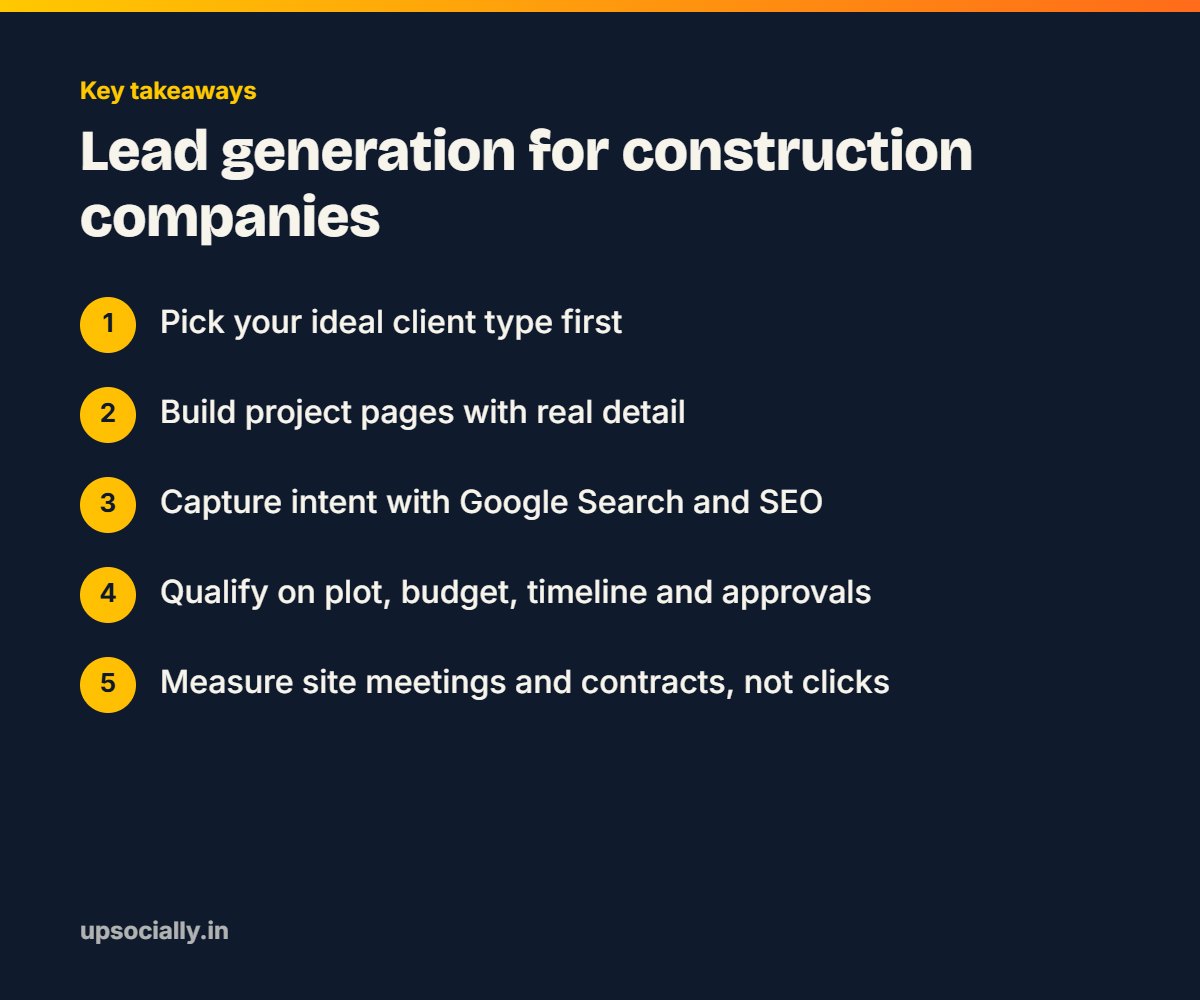
1. Make Your Website the Foundation
Almost every serious client will visit your website before contacting you. If it looks outdated or says very little, they’ll move on.
A construction website that generates leads should include:
- Project pages with real detail: location, size, type, timeline and photos from start to finish.
- A page for each service: residential, commercial, industrial, renovation, turnkey.
- Location pages for the areas you actually work in.
- Your process, from first meeting to handover.
- Credentials: years in business, licences, certifications and team.
- Cost guidance, such as typical ranges and what affects price.
- WhatsApp, call and form options on every page.
We’ve written about this in detail on our page for website development for construction companies.
2. Capture Ready-to-Build Clients With Google Search Ads
Search ads reach people at the moment they’re looking for a builder. For most construction companies, this is the fastest channel to generate enquiries.
- Target specific searches like “house construction company in Chennai” or “PEB contractors in Bangalore”.
- Add negative keywords to block job seekers, material suppliers and DIY searches.
- Send each ad group to a relevant landing page, not your homepage.
- Track calls and WhatsApp clicks, not just form submissions.
- Show ads only in the areas you can actually serve.
3. Build Long-Term Demand With SEO
SEO takes longer than ads, but it brings enquiries without paying for every click. The most useful content for construction companies includes:
- Service and location pages that match how clients search
- Detailed project case studies
- Cost guides, such as what affects the cost per square foot
- Guides on approvals, timelines and choosing a contractor
- Answers to common questions, written for both Google and AI answer engines
4. Win Local Searches With Google Business Profile
When someone searches “builders near me”, the map results often appear first. A complete Google Business Profile with accurate categories, service areas, project photos and regular reviews helps you appear there.
Ask happy clients for a review at handover. Reviews influence both your map rankings and the decisions of future clients.
5. Use Meta Ads for Residential Projects
Facebook and Instagram work well for homeowners, who often start thinking about construction long before they search for a builder.
- Use real site videos and walkthroughs instead of stock images.
- Share construction progress stories and handover moments, with client consent.
- Offer something useful, such as a cost estimate or a plot consultation.
- Add qualifying questions to lead forms: plot ownership, location, budget and timeline.
6. Use LinkedIn for Commercial and Industrial Work
If you build offices, factories or warehouses, your clients are on LinkedIn.
Share project milestones, safety practices and case studies. Engage with architects, facility managers and procurement teams. LinkedIn ads can target by industry, job title and company size, which suits high-value B2B projects.
7. Turn Referrals Into a System
Referrals don’t have to be random. A few simple habits make them more predictable:
- Ask for referrals at handover, when clients are happiest.
- Stay in touch with architects, structural engineers and real estate agents.
- Send past clients occasional updates on new projects.
- Track which partners send the best projects and thank them.
8. Don’t Confuse Tenders With Lead Generation
Government and public sector projects usually come through tenders, not marketing. If this is part of your business, register on the Government e-Marketplace (GeM), the Central Public Procurement Portal and your state’s e-procurement portal. Your website and case studies still help, because evaluators and partners will look you up.
9. Qualify and Score Every Lead
Qualification is where lead generation for construction companies often breaks down. Your team spends hours on calls with people who were never going to build.
Ask a few simple questions early, then score the answers:
| Question | Hot lead | Nurture |
|---|---|---|
| Do you own the plot or site? | Yes, registered | Still searching |
| Where is it located? | Inside your service area | Outside your area |
| What’s your approximate budget? | Matches your typical projects | Far below your range |
| When do you want to start? | Within 3 months | “Sometime next year” |
| Do you have approvals and drawings? | Yes, or ready to start with you | Not started |
Hot leads should get a call within minutes. Others can go into a slower nurture sequence with useful content.
Follow Up Fast and Consistently
- Respond within an hour during working hours, ideally sooner.
- Use WhatsApp, since most clients prefer it to email.
- Track every lead in a simple CRM or shared sheet.
- Send useful follow-ups, such as project examples or a process guide.
- Record why lost leads didn’t proceed, so you can improve.
A Simple 90-Day Plan
| Phase | Focus | Outputs |
|---|---|---|
| Days 1–30 | Foundations | Website fixes, project pages, Google Business Profile, call and WhatsApp tracking |
| Days 31–60 | Demand capture | Google Search campaigns, qualifying forms, lead scoring, CRM |
| Days 61–90 | Growth | SEO content, Meta or LinkedIn campaigns, referral habits, monthly reporting |
A Note for Developers Selling Property
If you also sell plots, villas or apartments, real estate advertising rules apply. In Tamil Nadu, for example, TNRERA’s advertising guidelines from 1 July 2025 require the registration number, a QR code and other details on property ads, including on social media. We cover this in our guide to real estate website development.
What to Measure
Clicks and likes don’t build projects. Measure the stages that lead to revenue:
- Cost per enquiry, by channel
- Cost per qualified lead
- Site meetings booked
- Quotations sent
- Contracts signed and their value
- Time from enquiry to contract
Common Mistakes to Avoid
- Sending all ads to the homepage
- Using stock photos instead of real projects
- Hiding cost guidance, so every enquiry becomes a price check
- Calling leads back the next day
- Judging marketing by lead volume instead of signed contracts
Final Thoughts
Lead generation for construction companies isn’t about one channel. It’s a system: a website that builds trust, ads and SEO that bring the right people, and a sales process that qualifies and follows up.
Get those working together and referrals become a bonus, not your only source of work.
See how we approach digital marketing for construction companies, read our website development checklist, or browse our construction marketing FAQs.
Frequently Asked Questions
What is the best way to get construction leads online?
For most construction companies, Google Search Ads bring the fastest enquiries, while SEO, Google Business Profile and a strong website build long-term demand. Meta suits residential projects and LinkedIn suits commercial and industrial work.
How do I improve lead quality for my construction company?
Target specific searches and locations, use qualifying questions on forms, show cost guidance on your website, score leads on plot ownership, budget and timeline, and follow up quickly with serious enquiries.
How long does lead generation for construction companies take to show results?
Search ads can bring enquiries within days of launch. SEO usually takes several months to build momentum. Most companies use both: ads for immediate demand and SEO for long-term growth.
Should construction companies use Instagram?
Yes, especially for residential work. Real site videos, progress updates and handover stories help homeowners trust you before they call.
How can contractors find government projects?
Government projects are usually procured through tenders on portals such as the Government e-Marketplace (GeM) and the Central Public Procurement Portal, as well as state e-procurement portals. These need registration and are separate from marketing-led lead generation.
Do I need a website if I already get referrals?
Yes. Even referred clients usually check your website before they call. A weak website can lose you referrals as well as new enquiries.